Building permit review is complex for a reason. Municipal staff are responsible for confirming that proposed work meets applicable requirements, protecting public safety and applying professional judgment to projects that can vary widely in scope and complexity.
But not every issue discovered during formal review requires that level of expertise. Missing documents, incomplete information and certain identifiable compliance concerns can create correction and resubmission cycles that consume time for applicants and reviewers alike.
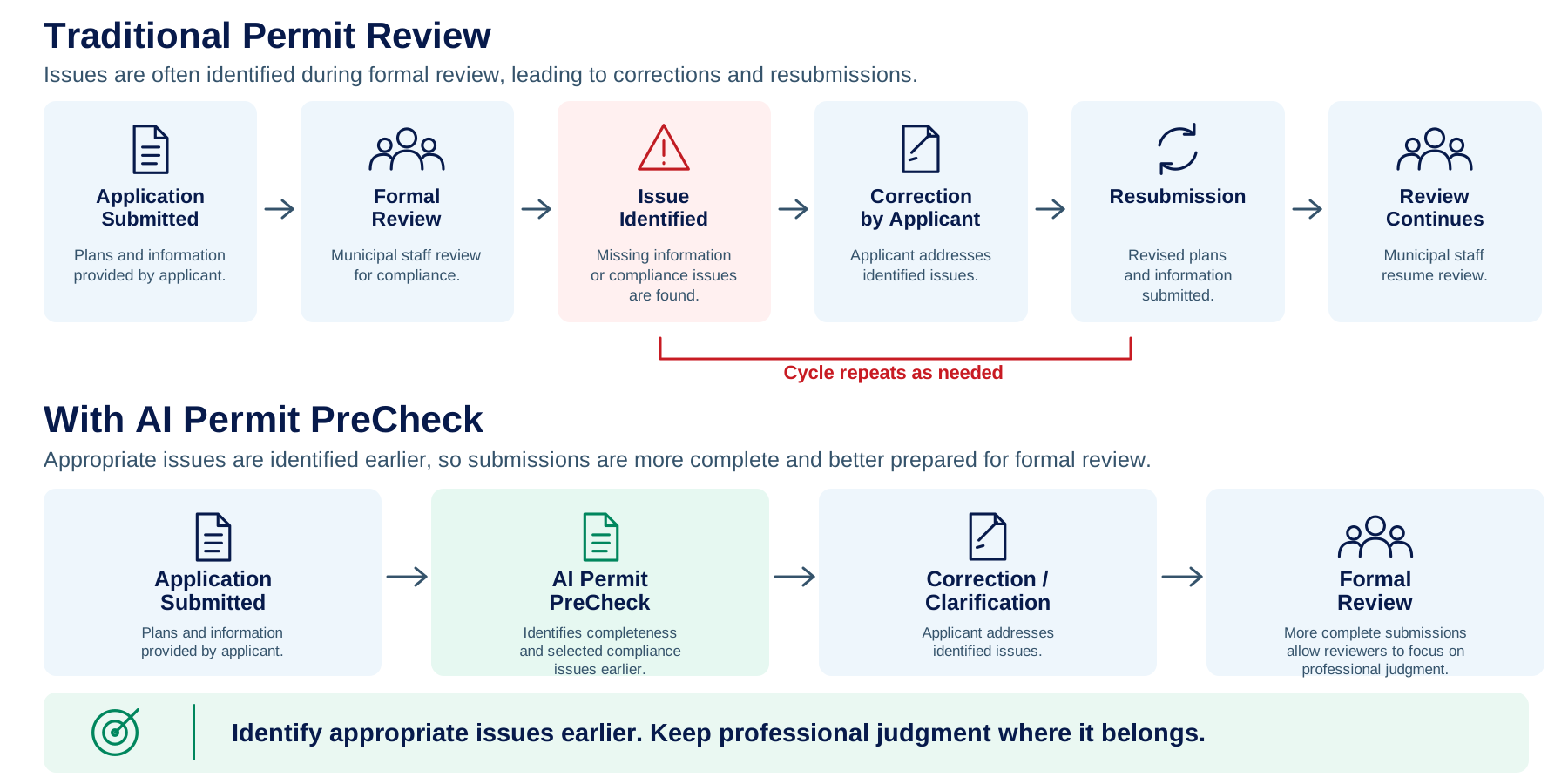
AI-assisted permit pre-checking offers a practical way to move appropriate checks earlier in the permitting process. Rather than replacing municipal review, it can help identify submission issues sooner—so applicants and staff can address avoidable problems while professional reviewers retain responsibility for interpretation, judgment and formal permit decisions.
In practice, it helps to think about the permitting process across three areas: what PreCheck can assess for completeness, what it can analyze for selected compliance requirements, and what remains appropriately in the hands of professional reviewers.
Application Completeness
Are the required documents and configured pieces of information present? Completeness checking can identify missing or deficient submission elements so they can be addressed earlier in the process.
Selected Compliance Checks
Where configured, submitted material can be analyzed against selected zoning, building-code or other applicable requirements and potential issues can be flagged for attention.
Professional Review
Interpretation, exceptions, complex technical questions, professional judgment and formal approval remain with authorized municipal staff.
"The goal isn’t to automate every decision. It’s to identify the right issues at the right point in the process."
Formal review is an expensive place—in applicant effort, staff effort and elapsed time—to discover a problem that could reasonably have been identified sooner. Once an incomplete or deficient submission enters the review process, resolving the issue may require additional communication, corrected documents, resubmission and another review cycle.
Moving appropriate checks upstream does not eliminate the inherent complexity of permitting. It can, however, help prevent avoidable complexity from entering the formal review process unnecessarily.
Earlier visibility into potential submission problems can help applicants understand what may need attention before or during intake.

Structured pre-check findings can help professional staff focus more of their attention on substantive, complex and judgment-based review.
A configured pre-check can support better submission quality, clearer feedback and a more efficient intake and review workflow.
The impact will naturally vary by jurisdiction and implementation, but the opportunity is straightforward: identify appropriate issues earlier so applicants and reviewers can spend less time resolving problems that could have been caught sooner.
The strongest use case for AI in permitting is not to remove professional oversight. It is to apply technology where repeatable analysis can assist the people responsible for review.
AI-generated findings are there to support municipal professionals—not make decisions for them. Municipal staff remain responsible for reviewing the application, handling exceptions, interpreting requirements and making formal regulatory decisions. A successful pre-check is not a permit approval, and an AI finding does not independently approve or deny an application.
AI can assist with:
Municipal professionals retain:
"AI Permit PreCheck is most useful when it helps professionals spend less time discovering preventable submission problems and more time applying the expertise only they can provide."
PreCheck workflows can be configured to the specific needs of your jurisdiction. AI-assisted analysis can be introduced at different points in the permitting journey depending on local requirements, existing processes and the experience you want to provide for applicants and staff.
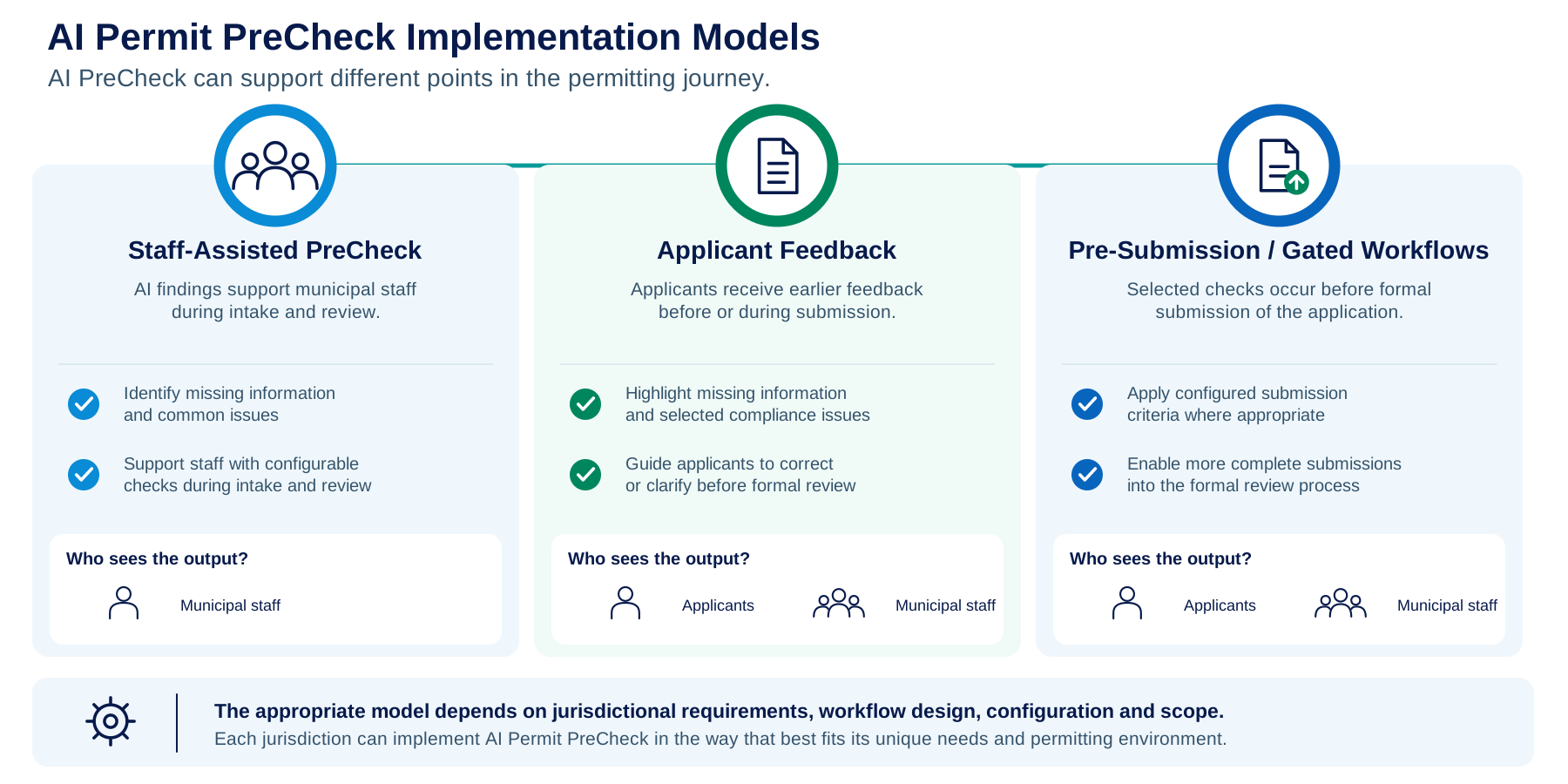
A jurisdiction may begin with a staff-assisted model in which pre-check findings are available during intake or review. Other implementations may provide selected feedback directly to applicants. Other submissions can establish defined submission criteria before an application proceeds. The appropriate starting point depends on the problem the jurisdiction is trying to solve and its readiness to operationalize the technology.
Municipal implementations already demonstrate that AI-assisted pre-checking can take different forms while preserving formal staff review.

Cambridge offers Archistar AI PreCheck to provide preliminary feedback on selected zoning requirements for eligible residential projects before a building permit application is submitted. The City expressly notes that results are informational and do not replace formal staff review.

Kingston uses Archistar AI PreCheck during the building-permit intake process. Its implementation includes completeness checking and configured compliance analysis while applicants continue to use the City’s existing application process and staff continue to review and approve every application
As demonstrated in these jurisdictions, the value of PreCheck does not depend on removing the reviewer or forcing every jurisdiction into the same applicant experience. The common objective is to identify appropriate issues earlier and provide better information to the people involved in the permitting process.
Computronix partners with Archistar to bring AI-assisted pre-check capabilities to POSSE PLS permitting environments. Archistar AI PreCheck can be integrated with POSSE PLS workflows to support configured completeness and, where appropriate, selected compliance checking.
The integration connects Archistar’s AI PreCheck technology with the POSSE PLS permitting workflow. To start, an applicant submits through the POSSE customer workflow, configured submission material is processed by Archistar AI PreCheck, and resulting findings can be made available to municipal staff as part of the permitting workflow. Applicant-facing feedback and more advanced gating models can be considered where they form part of the defined implementation.
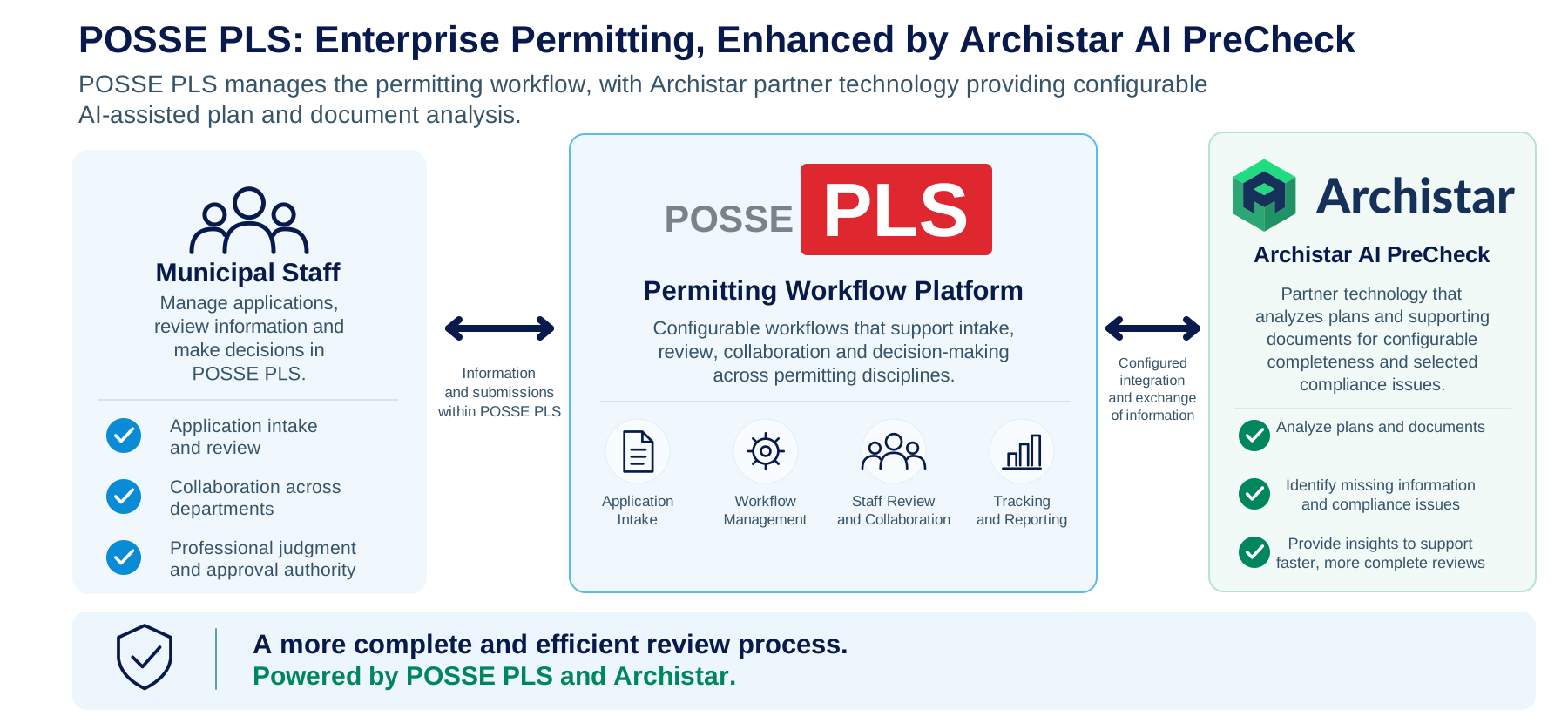
Existing POSSE PLS customers can explore adding Archistar AI PreCheck as an integrated capability. It is not a switch-on feature included in every POSSE deployment. The appropriate scope depends on the jurisdiction’s permitting workflows, requirements, source materials, configuration, integration and validation needs.
Already Using POSSE PLS?
Explore where Archistar AI PreCheck could support completeness checking, selected compliance analysis or staff-assisted review within your existing permitting environment.
Considering POSSE PLS?
Archistar AI PreCheck can be evaluated as an added partner capability within a new POSSE PLS implementation, with scope and implementation requirements defined for the jurisdiction.
For both existing and prospective customers, the useful starting question is not simply whether AI can be added to the permitting process. It is where earlier, configured analysis can improve the flow of information without compromising professional oversight or municipal decision authority.
No. AI PreCheck provides decision-support findings. Municipal staff remain responsible for formal review and for approving or denying permit applications.
No. It can assist with configured completeness and selected compliance checks, helping reviewers focus their professional attention on complex, technical and judgment-based work.
Yes. For defined permit types and jurisdictional requirements, AI PreCheck can assess whether configured documents and information are present and return structured findings for review.
It can support selected compliance analysis where requirements have been configured for the implementation. It should not be understood as universally checking every code, discipline or requirement out of the box.
Applicant-facing pre-check feedback can be part of an implementation, but the workflow varies by jurisdiction. Some implementations use AI findings behind the scenes during intake or review, while others expose selected feedback earlier to applicants.
Yes. Existing POSSE PLS customers can evaluate Archistar AI PreCheck as an integrated Archistar capability. The scope, configuration, integration and validation requirements are defined for each implementation.
Every permitting environment is different. The right role for AI PreCheck depends on the applications being reviewed, the requirements that can be configured, the existing workflow and the outcomes the jurisdiction is trying to improve.
Computronix can help existing and prospective POSSE PLS customers explore where Archistar AI PreCheck could fit within their permitting environment—and where AI-assisted analysis can add practical value while keeping professional review and municipal decision-making exactly where they belong.